September 16, 2026, Las Vegas. Swedish AI company Endra launched Power Studio — billed as the "first agent platform built for electrical engineering" — while announcing its acquisition of Swiss mechanical-engineering AI lab Planlabs. Just a week earl
September 16, 2026, Las Vegas. Swedish AI company Endra launched Power Studio — billed as the "first agent platform built for electrical engineering" — while announcing its acquisition of Swiss mechanical-engineering AI lab Planlabs. Just a week earlier, the company, founded in 2024, had closed a $50 million Series A led by Andreessen Horowitz. The target: a global MEP engineering services market worth over $150 billion — an industry run on human-wave tactics for 25 years, now meeting its first AI-native design tool.
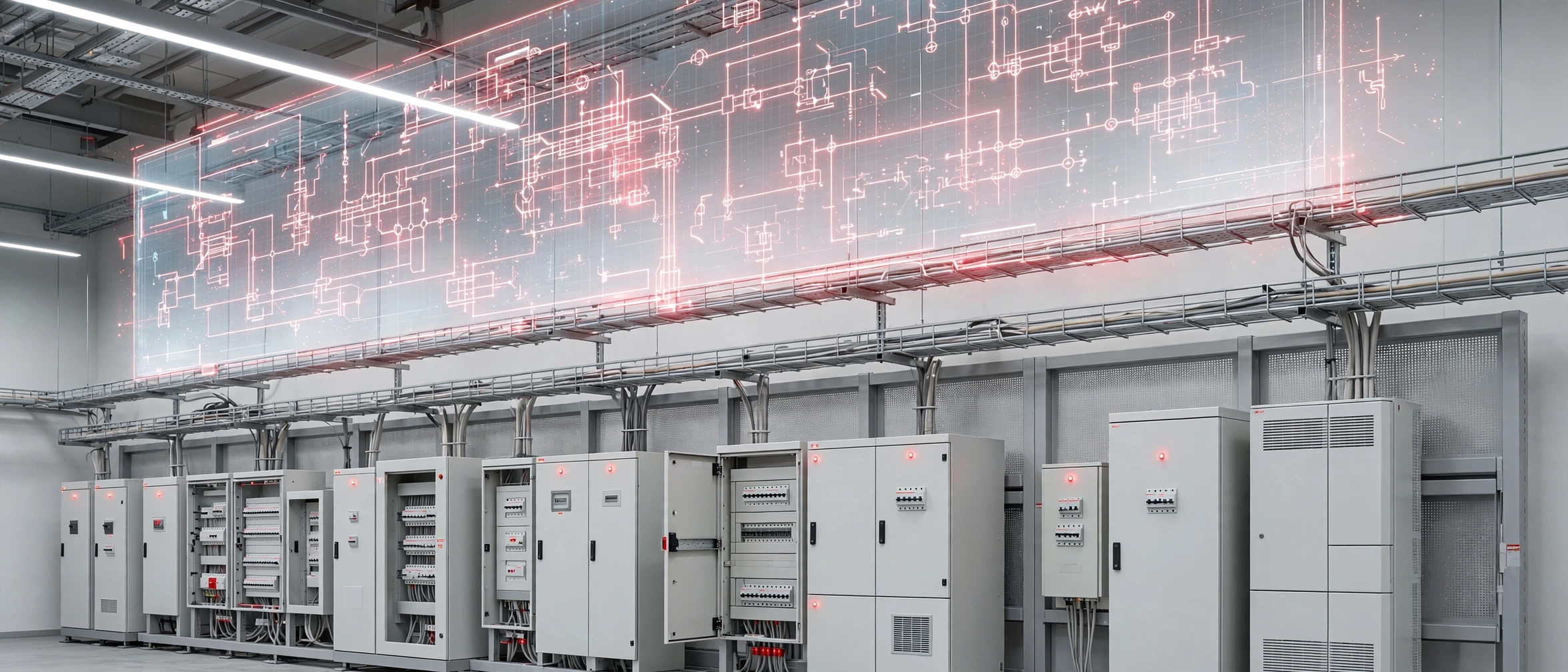
Endra's numbers are provocative: complete electrical design for a 500,000-square-foot (approx. 46,000 sqm) commercial building in under a day with Power Studio, versus about two months the traditional way. The workflow is "agents + human sign-off": engineers load the building model and set project requirements, and software agents execute equipment layout, circuiting, and routing — each step reviewed and approved by a human.
More critical is the "Playbooks" mechanism: firms can distill their own design standards — equipment layout habits, circuiting logic, code interpretation, calculation methods — into configurable templates so every project across the company is drawn to the same engineering judgment. The software auto-checks cable sizing, voltage drop, and other physical constraints against building codes, outputting Revit models, single-line diagrams, fabrication drawings, panel schedules, and bills of materials. As Endra CEO and co-founder Niklas Lindgren put it: "Endra takes over the repetitive work and gives engineers back the time for judgment and design."
It strikes at MEP's real pain point: for 25 years the work has been fractured across disconnected tools — drawing in Revit, calculating in Excel, coordinating in Navisworks — while the industry simply cannot train enough MEP engineers to fill the gap.
AI electrical design is no longer a one-company show. On June 17 this year, Toronto-based Augmenta released ACP 2.0 — an AI-native design environment co-developed with top North American electrical contractors. Its auto-routing engine generates clash-free electrical tray systems in minutes, with clash detection running live against the full 3D background model of ducts, pipes, and structure; when design changes arrive, the VDC team adjusts routing and re-runs affected zones, compressing what used to be days of rework into "what-you-see-is-what-you-get" rapid iteration. The new version folds underground routing into the same flow — overhead plus underground in one pass. In Augmenta's words, the rhythm of MEP coordination is shifting from "counted in weeks" to "counted in hours."
The two companies' lanes are actually complementary: Endra attacks from the "electrical design agent" side, covering the full chain of calculation, codes, and documentation; Augmenta attacks from the "contractor VDC team coordination speedup" side, solving the most time-consuming tray routing and clash work first. Both point to the same destination: AI is breaking MEP design's labor bottleneck.
For MEP equipment manufacturers like us, this changes the rules of the game. When designs are generated by AI agents, a product's "digital existence" becomes the precondition for being selected — AI only specifies products it "knows": products with complete BIM families, accurate ratings, standard mounting dimensions, and ampacity data get picked first by the agent; no matter how good a product is, if it exists only in a paper catalog, it effectively doesn't exist in the AI design flow.
Our busway, cable tray, low-voltage switchgear, and distribution panels happen to be the most-used, most-frequently-specified categories in AI electrical design. The next investment worth making: turning product data into an asset — complete, accurate BIM component libraries, parameter packages covering mainstream design platforms, standardized selection logic — so agents on platforms like Endra's and Augmenta's "know" J-YOUNG's products. This is the next phase of channel building — the channel isn't at the trade show, it's inside the design software.
The other amplified advantage is lead time. Once AI compresses the design cycle from two months to a day, manufacturing and delivery become the new bottleneck. Suppliers who "can customize and deliver fast" will earn an outsized premium — and that is exactly our strength: domestic manufacturing with rapid response. The faster the design, the higher the demand on delivery — our speed is precisely what keeps up with AI's speed.
In the AI era of MEP, the contest isn't about who draws faster, but whose product data is more complete and whose delivery keeps pace. Building the digital product library is our shelf space in the agent era.