When a building's MEP systems gain a "digital double," failures stop being emergencies and become math problems you can solve in advance.
When a building's MEP systems gain a "digital double," failures stop being emergencies and become math problems you can solve in advance.
A modern building's MEP systems — HVAC, power distribution, plumbing, fire protection — are like the body's vital organs: running 24/7, hidden above ceilings and inside shafts. The old model was "fix it when it breaks": a chiller shutting down at midnight, a distribution panel tripping without warning — every incident a loss.
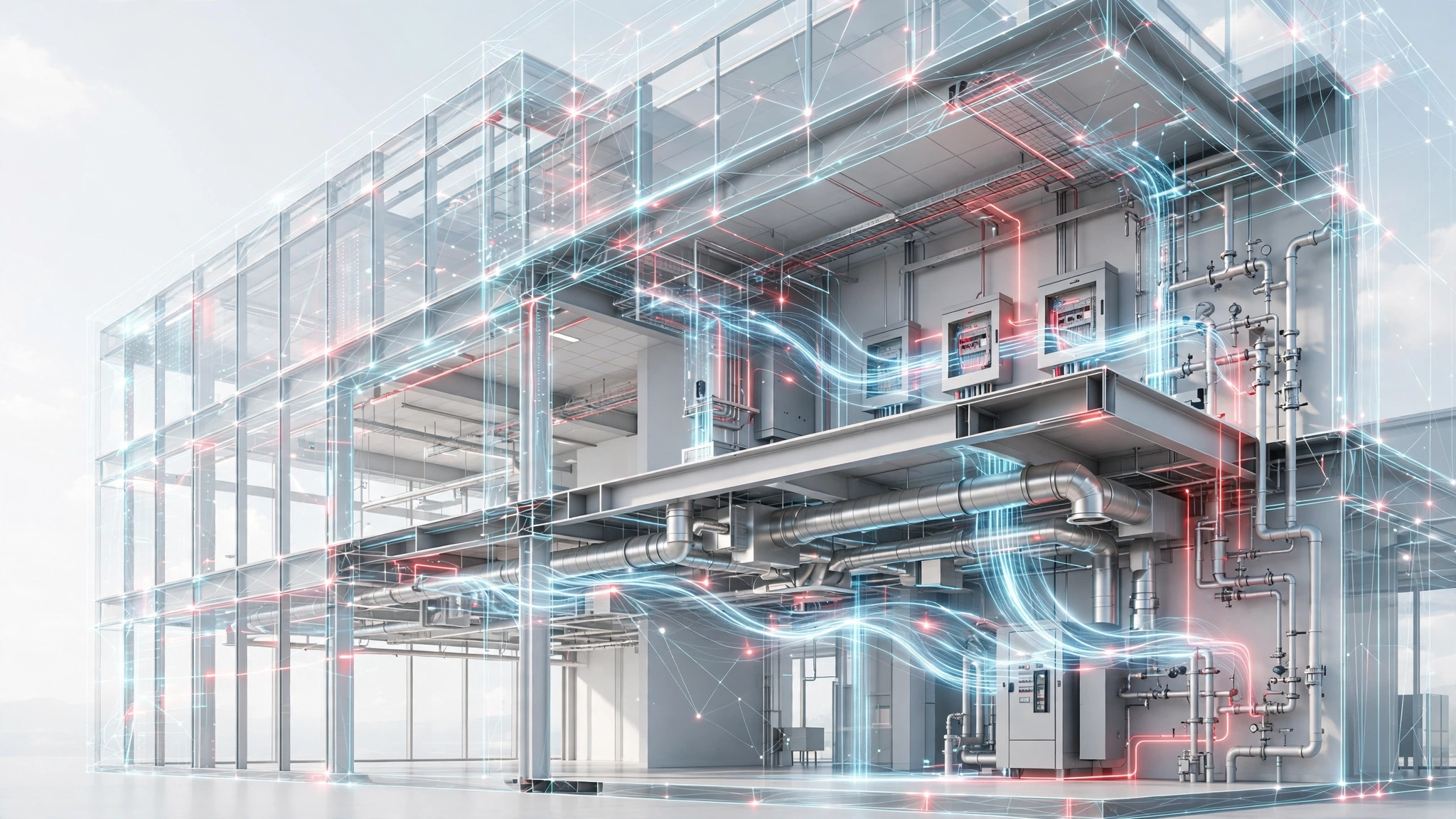
Digital twins are rewriting that logic. They upgrade the building information model (BIM) from "static drawings" to a "live double": the model connects to the real building through IoT sensors, mapping HVAC energy use, electrical loads, water consumption, equipment vibration and temperature into the virtual model one by one. Engineers can simulate first and act second — testing an HVAC retrofit in the virtual world takes minutes, beating weeks of trial and error in a real mechanical room.
The technology is already paying off in real projects. At a hospital project in Shenzhen, the design team used a digital twin platform to catch an air-duct/fire-pipe clash in the ceiling zone before construction, rerouted the services in time, avoided rework, and saved roughly RMB 2 million. At a financial office tower, monitoring elevator vibration and temperature data flagged bearing wear early, avoiding downtime losses and extending equipment service life by more than three years.
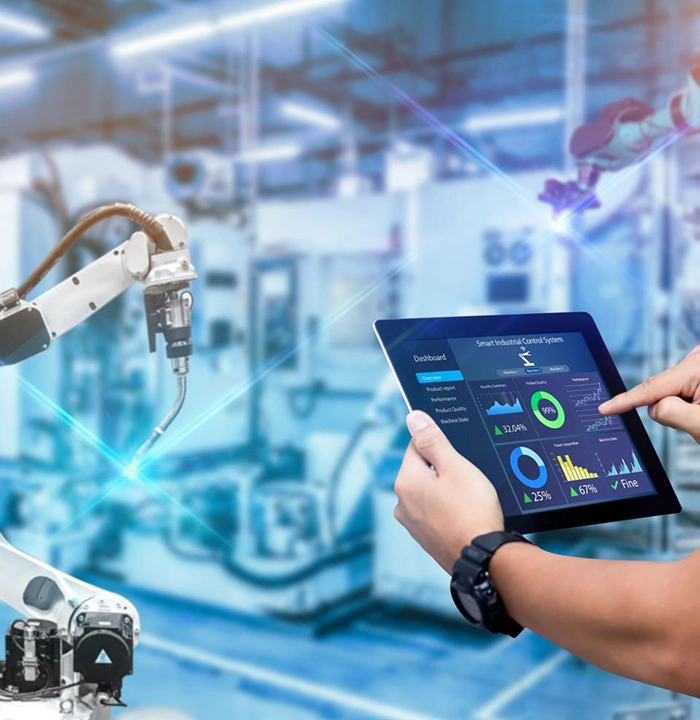
If the digital twin is the "eyes," AI is the "brain." Equipment data from vibration, temperature, and acoustic sensors feeds machine-learning models that can predict failures weeks ahead — when a bearing will fail, when pump efficiency will degrade, which chiller is about to run "sick." Industry practice shows this shift from reactive repair to condition-based maintenance can cut O&M costs by 30–50% while significantly extending asset life.
Going further is the building-scale "AI energy manager." New-generation AI building energy management systems analyze occupancy, weather, and electricity prices in real time to auto-tune HVAC setpoints; enroll in grid demand-response programs so the building earns revenue as a "virtual power plant"; and auto-generate ESG and carbon reports for compliance with New York's Local Law 97, EU efficiency directives, and the like. Industry coverage reports edge-native systems like Trane AI Control and Siemens Comfort AI delivering 20–30% energy savings with payback under 12 months.
AI's impact reaches beyond operations into design. Tools like Spacemaker and TestFit optimize space with MEP constraints in the early design stage; Verifi3D runs rule-based automated checks on BIM models; AI plugins for Revit MEP auto-optimize duct routing, electrical circuits, and pipe layouts; Autodesk's generative design produces thousands of options in one run under competing space, cost, and sustainability constraints for engineers to choose from.
At Autodesk University 2026, held September 15–17 in Las Vegas, Autodesk launched its new AI assistant "Autodesk Assistant" — generating 3D building models from natural language and letting all project parties work with models more smoothly. Autodesk's State of Design & Make 2027 report shows 70% of surveyed industry leaders expect AI to sharply reduce repetitive work, returning engineers' energy to real judgment and creation.
The trend is clear: MEP engineering is moving from "build and hand over" to "whole-lifecycle service." For us, that means two things:
First, tomorrow's busway, switchgear, and distribution panels aren't just "copper and steel that carry power" — they must become data sources. Only intelligent distribution equipment with temperature, current, and partial-discharge monitoring can plug into a building's digital-twin system and take its share of the predictive-maintenance chain.
Second, design moving upstream means "whoever wins the designer wins the project." When AI design tools auto-route and auto-select, suppliers who provide standardized digital models and fast design-assist coordination will make the project shortlist first.
Buildings are learning to think and to warn. And making every kilowatt-hour "sensible and predictable" is the new homework for our generation of MEP professionals.